Showing posts with label Waziristan. Show all posts

18 April, 2007

Problems looming for Iraq from North Waziristan

Last week, following a "turf war" in South Waziristan in which the Taliban killed some 300 al-Qaeda Uzbeks, many Uzbeks were reported to be fleeing to North Waziristan. Now it seems the circumspect amongst the Uzbeks are beginning to leave North Waziristan. The Pakistani Daily Times reports that:

“Around 50 families of foreigners have departed for their respective countries in the last month,” the spokesman, Gohar Ayub, told NNI from North Waziristan. He said he was speaking on behalf of local Taliban spokesmen Abdullah Farhad and Tariq Jamil. President Gen Pervez Musharraf informed army generals from 22 countries on Friday that tribesmen had killed 300 foreigners in South Waziristan and that he expected similar action in North Waziristan. ““The foreigners decided to leave North Waziristan after the tribal operation against the Uzbeks in South Waziristan. The foreigners said they did not want their women and children to become targets,” the Taliban spokesman said. He said that around 50 families, including Chechens, Turks, Tajiks and Arabs, had returned to their countries.

Ayub said that most of the families were returning to their homelands through Afghanistan and Iran. He said the Arabs were planning on returning to Iraq. It is difficult to verify the claim independently, reports NNI. Ayub said it was possible that they were relocating to Afghanistan for “jihad” but he added that this was their decision and had nothing to do with the tribal leaders in North Waziristan.

The spokesman said the foreigners were leaving the area through their own decision because of the fights between tribesmen and foreigners in South Waziristan. He said the tribal elders had not advised them on this matter. He said the foreigners had told their local supporters that they would make future strategy after leaving their women and children behind in their home countries.

Ayub said that the local Taliban were strictly following the September 5 peace agreement with the government. He said that as long as the government didn’t violate it, the local Taliban wouldn’t either. He said that no one entered Afghanistan through North Waziristan and combatants were coming from different parts of Afghanistan.
It could be bad news for coalition forces in Iraq.

16 April, 2007

A Tale of the Raj from Waziristan

The Hindustan Times has an entertaining, story from an Indian British Army officer. Little seems to have changed since the days of the Raj, when Waziristan was part of India and of the British Empire. I wonder if the women behave the same.

13 April, 2007

Pakistani army in South Waziristan.

The western mainstream media are beginning to pick up on the recent battles between the Taliban and al-Qaeda in South Waziristan.

In the UK, the Daily Telegraph focuses on Pakistani army's "marriage of convenience" with the Taliban.

Over the pond, the LA Times joins the DT in highlighting President Musharraf's acknowledgement for the first time that the Pak army is supporting the Taliban against the Uzbeks.

The BBC has a video news report from the area.

Uzbek casualties are currently being reported as 300 dead.

10 April, 2007

Terrorist fall out.

Reports are emerging of clashes between Afghan Taliban and Uzbek al-Qaeda forces in South Waziristan. Global Terrorism Analysis carries an article entitled The Turf War in South Waziristan which says that current conflicts between the two parties, as reported in Dawn, " ...is a turf war that began to brew soon after the Taliban's victory over government troops in neighboring North Waziristan."

Global Terrorism references reports in Dawn on 5 April and on 6 April (filed on the 6th but in the 7 April edition). Other recent, related articles from Dawn are Dozens Killed As Tribesmen Attack Foreign Militants and , Tribesmen Seek Air Support Against Uzbeks.

The Daily Times also picks up the story, saying that the defeated Uzbeks are probably heading to North Waziristan.

Although al-Qaeda being on the receiving end of a good hiding is nothing to worry about, there must be some concern that, in consolidating their hold in western Pakistan, the Taliban is thereby posing an ever greater threat to ISAF forces in Afghanistan.

12 December, 2006

Pakistan - appeasing the militants?

The International Crisis Group, an independent think tank, has issued a report: Pakistan's Tribal Areas: Appeasing the Militants. According to the Daily Telegraph:

The ICG report said that the militants "now hold sway in South and North Waziristan agencies" and had begun to expand their influence. It added that the state's "failure to extend its control over and provide good governance to its citizens in federally administered tribal areas is equally responsible for empowering the radicals".

A spokesman for Pakistan's foreign ministry declined to comment on the report.
However, as the International Herald Tribune the governor of North West Frontier Province has gone on the defensive.

The ICG report's executive summary and recommendations can be found here along with downloads of the full report in both pdf and MSWord formats.

Update 13.12.06
Having now read the ICG report, I can recommend it as a first rate general introduction to the history, politics and governance of the Pakistani areas bordering on Afghanistan. The report's proposals,however,seem to me to amount to a wish list for the imposition of western liberal norms and concepts of human rights-based legal systems to replace the current neo-feudal administrations in the borderlands. Irrespective of its merits or otherwise, such would require a major cultural and political revolution which is unlikely to happen as a "big bang".

18 November, 2006

Tony Blair in Pakistan.

Tony Blair has gone to Pakistan bearing gifts for President Musharraf. According to the BBC:

It is expected that security in Afghanistan and counter-terrorism co-operation will be on the agenda.

Mr Blair will also pledge to double the UK's development aid for Pakistan to £480m ($960m), UK officials said.

The money over three years will be used to support Gen Musharraf's educational reforms which aim to counter the influence of Islamic religious schools, or madrasas, seen as a breeding ground for militancy.

"It is not just designed to counter radicalism but also to train people in the skills which allow the Pakistan economy to develop," Mr Blair's spokesman told reporters.

There will also be a counter-terrorism package of technical assistance, worth some £8m ($15m), UK officials said.
No doubt Taliban infiltration into Afghanistan from its safe bases in Waziristan will be on the agenda.

The International Herald Tribune reports that Musharaff is calling on the international community to re-evaluate its strategy in Afghanistan. In an interview with a German magazine the president,
warned that disappointment with the Afghan government could translate into popular support for the Taliban among ethnic Pashtuns.

"Before it is too late, we must win over the non-militant Pashtuns and separate them from the others," Musharraf was quoted as saying in an interview released ahead of publication on Monday.

Musharraf also insisted Pakistan's secret service was not helping the Taliban.

"Pakistan is not a banana republic. We have an extremely loyal and disciplined army. The secret service is made up mainly of military men," he reportedly said.

Waziristan: haven for jihad?

The Fourth Rail links to a CBN item in which Bill Roggio and Daveed Gartenstein-Ross examine events in Waziristan, along with a video report.

More from Gartenstein-Ross and Roggio on Pakistan's surrender of the area to the Taliban from from the Weekly Standard

Broken link fixed.

13 November, 2006

Neobans and Neocons

News Central Asia has an article entitled "The Neobans and the Neocons" which examines what the author, a Karachi lawyer, calls the USA's "aggressive and expansionist agenda in the South and Central Asia and Middle East." Essentially, it is a potted Pakistani history of the War on Terror in Afghanistan and Pakistan, including Waziristan, covering al Qaeda, the Taliban and the Waziri Accord; it refers to the latter as the MiramShah Agreement, after the place where it was signed.

It contains nothing startlingly new but it does provide a useful historical time-line and general reference to past events. Moreover, it is both interesting and instructional to view those events, and the roles in them of al Qaeda and the Taliban, from a Pakistani perspective. The fairly long article is split into four parts.

Part One;

Part Two;

Part Three;

Part Four.

The term "neoban" does not appear outside the title and I can find no relevant reference to the word , so the author may be victim of a sub-editor and a fairly awful pun on Taliban.

31 October, 2006

While Iraq bleeds, Pakisan seethes.

Over at The American Thinker, Rick Moran, of Right Wing Nuthouse, has a valuable analysis of the problems facing President Musharraf in Pakistan, as he attempts to survive whilst juggling support for the War on Terror with the hostility of domestic Islamic extremists.

The conclusions are consonant with my own paradoxical reading of the Waziristan Accord back in September: it is both a sham and a genuine attempt to solve Pakistan's Taliban problem. Welcome to the 2006 edition of The Great Game.

26 October, 2006

Waziristan: Taliban taxes and law and order.

Having created a safe refuge for itself in Waziristan, the Taliban (aka militants) is starting to behave like a government and impose taxes. From the Australian:

PRO-TALIBAN militants operating in North Waziristan have announced plans to levy local taxes, further eroding Pakistan's authority in the remote tribal region bordering Afghanistan.

The plans were announced in pamphlets issued in the local capital, Miranshah. They follow the controversial September 5 agreement between local militants and Pakistani authorities, apparently with the personal approval of the Taliban leader Mullah Mohammad Omar.
In addition to taxation, another government function the Taliban has usurped is proving rather more popular with the locals: law and order. Khaleej Times:
Near Miranshah’s main bazaar, the militants have opened an office in an Islamist seminary, or madrasa, where their officials settle disputes among Pashtun tribesmen.

“We are responsible for maintaining law and order in the bazaar,” Eid Niaz, the deputy head of the office, told Reuters as tribesmen sat in a circle, waiting to plead their cases on issues such as disputes with neighbours.

Under the deal, tribes can be held responsible and punished for any violation to the agreement in line with tribal law. Punishment includes having vehicles confiscated by the government and shops and houses demolished or sealed.

Residents said crime had fallen since the militants took over security responsibilities in the region, though several people accused of being “American informers” had been killed.

“We’re happy that they have taken charge of law and order. We don’t have robberies anymore,” said one resident.

23 October, 2006

Picnicking with the enemy:

A New York Times reporter picnics with the Taliban and hangs out with drug dealers whilst, elsewhere, her friends are killing American, British and Canadian troops. It is a long article which reveals rather more about the left-wing media's mindset than anything new about Afghanistan.

15 October, 2006

Taliban in Waziristan threaten NATO

Pakistan Dawn argues that, contrary to earlier reports, the Waziristan Accord was not signed between the Pakistan government and local tribal elders but between the government and the Taliban. Although the Accord was supposed to remove foreign (i.e. Taliban) influences from Waziristan, it contained no enforcement mechanisms and an unchecked Taliban have become stronger than before in the area. Consequently, Waziri-based Taliban incursions into Afghanistan have become increasingly problematic for NATO.

...the deal stipulates that foreign militants living in North Waziristan would either leave or live peacefully. But no mechanism has been put in place to oversee and verify either their conduct or the departure of those who violate the agreement. Over a month after the signing of the deal, there is no progress on this front.

Contrary to the government’s assertion, troops deployed in and around Miramshah [regional capital], except those manning the borders, have been removed from check-posts and relocated to their camps. All weapons seized from militants have been returned and their men released.

There have been more kidnappings, robberies and murders since then as the Khasadar force — a ragtag, untrained tribal force left to man the posts — has neither the teeth nor the wherewithal to rein in the militants or control crime, area residents point out.

Eyewitnesses say there are now not one but two Taliban offices in Miramshah to maintain law and order, control crime and address public complaints, a serious violation of the agreement by the Taliban who had undertaken not to form a parallel administration in the tribal region.

There is growing evidence that militants are now more assertive than they were before the September 5 agreement. Recently they wrested custody of suspects, along with a vehicle the latter had snatched, telling the Khasadars that they would deal with the suspects themselves. Nothing is known as to what happened afterwards as the hapless Khasadars merely looked on.

The agreement says that there will be no cross-border infiltration but Nato military officials stationed in Afghanistan have been quoted as saying there is a 3oo per cent increase in militant activity in the border regions. The death of a local militant commander, Maulvi Mir Kalam, and his men in an operation across the border and the capture of 10 of their comrades by security forces is a case in point.

The deal also stipulated there would be no targeted killings but recent reports indicate that alleged spies have been assassinated by militants in the region.

In essence, there are two main verifiable clauses in the agreement: one, that the militants would not attack government forces and installations and, two, that the government, for its part, would not undertake any ground or air offensive. That the two sides have stuck to their word on at least these two points explains the relative peace in an otherwise volatile tribal region.

Equally crucial and perhaps central to this whole agreement were the two other clauses, the presence of foreign militants and cross-border infiltration. It is unclear what additional steps the government has taken to stop militants’ movement across the border since the truce. But if the death of Mir Kalam and the reported arrest and subsequent release of three ‘mujahideen’ in the Kurram tribal region — at the request of militants in North Waziristan — are any indication, the government will find it hard to defend its position that the truce is directed against the Taliban and not in their favour.

Indeed, peace is the desired goal. But one look at the agreement and the situation on the ground and it is glaringly evident that the government has chosen the path of pacification by appearing to capitulate to the militants than take corrective measures to ensure lasting peace. Peace is vital but not at the expense of abdicating state authority, as appears to have happened in Waziristan’s case. Therefore, when President Musharraf said at a recent gathering that “there is no guarantee that it [the agreement] will succeed”, it was pretty clear why.

Given the complexity of the situation, and to be fair to the president, it should be mentioned that Gen Musharraf also said that if anybody had a better idea of how to deal with the situation, he would be a patient listener.

But he is not the only player in the region, however critical his role in the war on terror may be. On cross-border infiltration, Kabul is being joined in its complaints by the International Security Assistance Force (ISAF). With a growing Taliban insurgency and mounting casualties being taken by the 37-nation Nato-led ISAF, Pakistan is coming under a lot of pressure to do more.

10 October, 2006

Pakistan and NATO: the problems.

Why is NATO getting upset with Pakistan? The fundamental problem is that the Taliban is operating against NATO forces from bases operated with impunity from inside Pakistan. In particular, the Taliban presence in Balochistan and in Waziristan is of concern.

Crumbling Spires has already dealt in some detail with Waziristan, on Afghanistan's eastern border. The Waziristan Accord has been widely interpreted as a surrender of the area by the Pakistan government, with the effect of providing safe bases for the Taliban.

Balochistan is south of Waziristan, on Afghanistan's south eastern border, adjoining Kandahar (click here for map). Despite Pakistani denials, NATO is concerned that Mullah Mohammed Omar, Taliban supreme leader, is based in Quetta, the regional capital, where elements of ISI - Pakistani intelligence services - are being very helpful to the terrorists. ISN reports that, during Operation Medusa,

NATO captured 160 Taliban, many of them Pakistanis who described in detail the ISI’s support to the Taliban. NATO is now mapping the entire Taliban support structure in Balochistan, ranging from ISI-run training camps near Quetta to huge ammo dumps, arrival points for new weapons and meeting places for the Taliban leadership council in the province’s capital.
Two training camps for the Taliban are located just outside Quetta, according to NATO and Afghan officers. The Taliban are using hundreds of local madrassas, or Islamic religious schools, to house the fighters and rally them for the mission ahead before sending them to the front.
According to a United Nations Security Council report, the safe bases in Balochistan and Waziristan are being used by five Taliban command and control centres, to organise the insurgency in Afghanistan. According to Daily India,
These include a Taliban command active in Afghanistan's north-eastern provinces, an eastern command and a southern command, as well as separate fronts established by two Taliban allies, veteran warlords Gulbuddin Hekmatyar and Jalaluddin Haqqani.
Although the UN does not allege that all these fronts are based in Pakistan, NATO and American intelligence says both Haqqani and Hekmetyar as well as Mullah Mohammed Omar in Pakistan.
These are the problems NATO's commander and Pakistan's president have been discussing. So far, nothing of substance has been made public; everybody is being diplomatic. The The Hindu reports,
An official from the Pakistan President's office said Richards ``praised Pakistan's role in the fight against terrorism but suggested that there should be an extended cooperation between NATO and Pakistan'' to defeat terrorism.
We shall have to wait to see precisely what that means, if anything.

Tags: ,

NATO commander in Pakistan

In Pakistan, the Taliban appears to be sending a message to President Musharaff. Several days ago, a rocket was fired at his offical residence in Rawalpindi. More rockets have been found near the Islamabad parliament. The Asia Times reported that

...it has has learned that the incidents were a clear show of disapproval in Waziristan over Musharraf's basking in "Washington's charm", and that he had not implemented a key aspect of the peace accord - the release of al-Qaeda suspects - despite numerous promises.
Asia Times draws the conclusion that these incidents represent a Taliban attempt "to keep Islamabad in line."

General David Richards, NATO commander in Afghanistan, is in Pakistan. He is also trying to keep Musharaff in line. They will be discussing reported links between ISI ( Pakistani intelligence) and the Taliban.

The Taipei Times outlines the accusations and denials.

27 September, 2006

War on Terror: the Waziristan problem

As widely feared, the Taliban are using the opportunities afforded by the Waziristan Accord to increase their activity in eastern Afghanistan. The International Herald Tribune reports a tripling of Tabliban attacks in the area, as a result of which the US army's Operation Mountain Fury has been involved in more combat than expected.

Waziristan is also where Osama bin Laden and the Al Qaeda leadership are widely believed to be holed up.Reasonably enough, the Americans want to know what Pakistan intends to do about the area's terrorist population. On the face of it, Pakistan is doing little, other than surrendering Waziristan to the terrorists. It is hardly surprising, therefore, that, as NDTV.com reports, the US is becoming "impatient" with Pakistan's inaction.

Tonight, President Bush is hosting a White House dinner for Afghan President Hamid Karzai and Pakistani President Pervez Musharraf. ABC News has a useful summary of the main points of contention. It could be a crucial meeting for the future direction, and prosecution, of the war on Terror. The mainstream media will, no doubt, be full of headlines saying this and that was decided but, providing Karazi and Musharaf do not end up trying to stick items of cutlery into each other, I do not expect anything of immediate significance being made public. That is not how the "great game" is played; and Musharaf, in particular, has a largely anti-US domestic audience to consider. We will just have to be patient and keep a careful watch on actual developments in Afghanistan and Pakistan over the coming weeks and months

24 September, 2006

Waziristan Pact

According to the Sunday Telegraph Mullah Omar, the monocular murderer, played a key role in the negotiations leading to the Waziristan Pact.

Tribal elders in south Waziristan said that Mullah Omar had sent one of his most trusted and feared commanders, Mullah Dadullah, to ask local militants to sign the truce. Dadullah, a one-legged fighter known for his fondness for beheading his enemies, is believed to be the man leading the campaign in southern Afghanistan in which 18 British troops have been killed.
Had they been not asked by Mullah Omar, none of them were willing to sign an agreement," said Lateef Afridi, a tribal elder and former national assembly member. "This is no peace agreement, it is accepting Taliban rule in Pakistan's territory."
I am not sure why the Telegraph should be running this item at this particular time, other than it is a quiet news day. It does not take too many grey cells to work out that senior Taliban figures were instrumental in the Pact, which I interpret as essentially a ceasefire between the Pakistan army, and the Taliban and friends.

The important question is whether the tribal leader, quoted above, is right about his assessment of the Pact. I implied in a post yesterday that the Pact is probably in part a sham, masking a surrender by the Pakistani army, and in part a genuine attempt to deal with the Taliban problem. It is a seemingly contradictory stance but the Pakistani government has a dilemma.

On the one hand, the Pakistani army needed a truce because of the casualties they were suffering. To that extent it was a surrender.

On the other hand, the Pakistani government is no supporter of Islamic terrorism, which is a source of domestic destabilisation. Perhaps they thought the best way to deal with the Waziri problem was to leave it to the local tribal chiefs, who have no desire to see a strong Taliban, or any other foreigners, in their territory. The government maybe hopes that the tribal chiefs can hold the line until NATO eventually destroys the Taliban. Interestingly, the Pakistanis have not been too strenuous in their objections to recent US intrusions into Waziri air space. To that extent, it was a genuine attempt to deal with the problem.

23 September, 2006

Waziristan Accord

Is the Waziristan Accord a real attempt to deal with the foreign troublemakers in the area or is it a sham?

In well-argued articles, Noblesse Oblige and The Fourth Rail have different perspectives but both argue a convincing case.

As is often the case, I think it is probably a bit of both. Either way, the worry remains that the Taliban will use the area to regroup for a new assault on ISAF forces in Afghanistan.

08 September, 2006

Waziristan

Never heard of it? You will have before long.

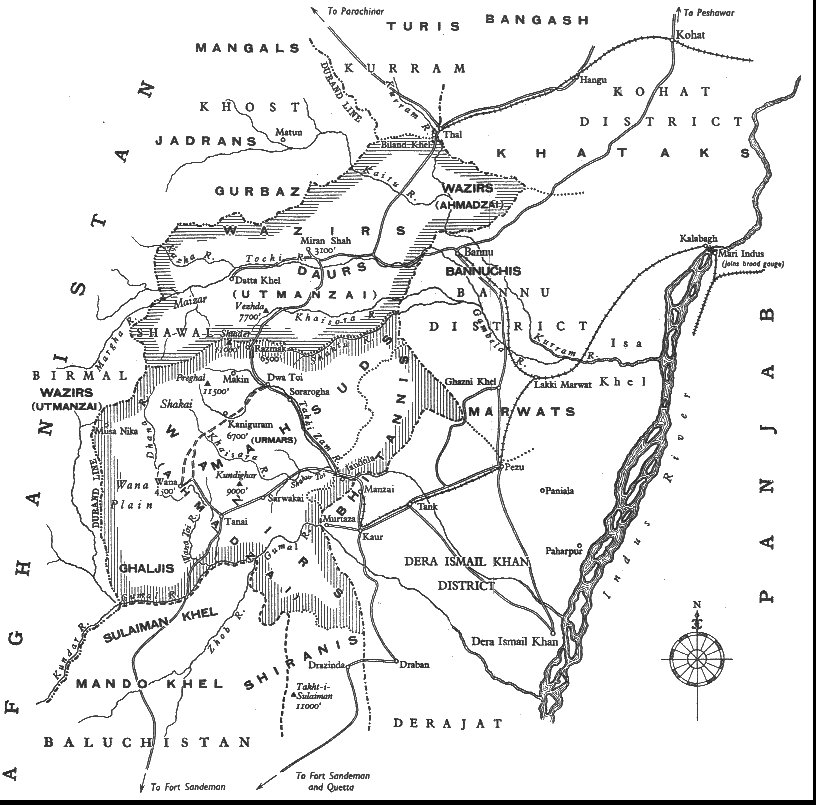
Waziristan is technically a province in North West Pakistan. In reality it is ungovernable bandit country, providing a base for terrorists, notably remnants of Al Qaeda, and the Taliban, driven out of next-door Afghanistan in 2001. It is an area in which the Pakistani army has been fighting the terrorists, without much success.

Now the Pakistan government has given up and surrendered the area to the murderous gangsters. No wonder the Chicago Tribune has dubbed it Terroristan. The CT articulates the obvious worry for the west:

It seems entirely likely that this area will become a sanctuary for terrorists, a protected place for them to regroup and rearm, a miniature version of what Afghanistan had become before the U.S. routed the Taliban starting in 2001.
The Times has a very thoughtful analysis of the serious consequences of Pakistan's actions, well worth a careful reading.